What construction details make sweatpants feel more premium?
Samples Don’t Win the Season: What a Scalable Streetwear OEM Has to Prove Before Bulk
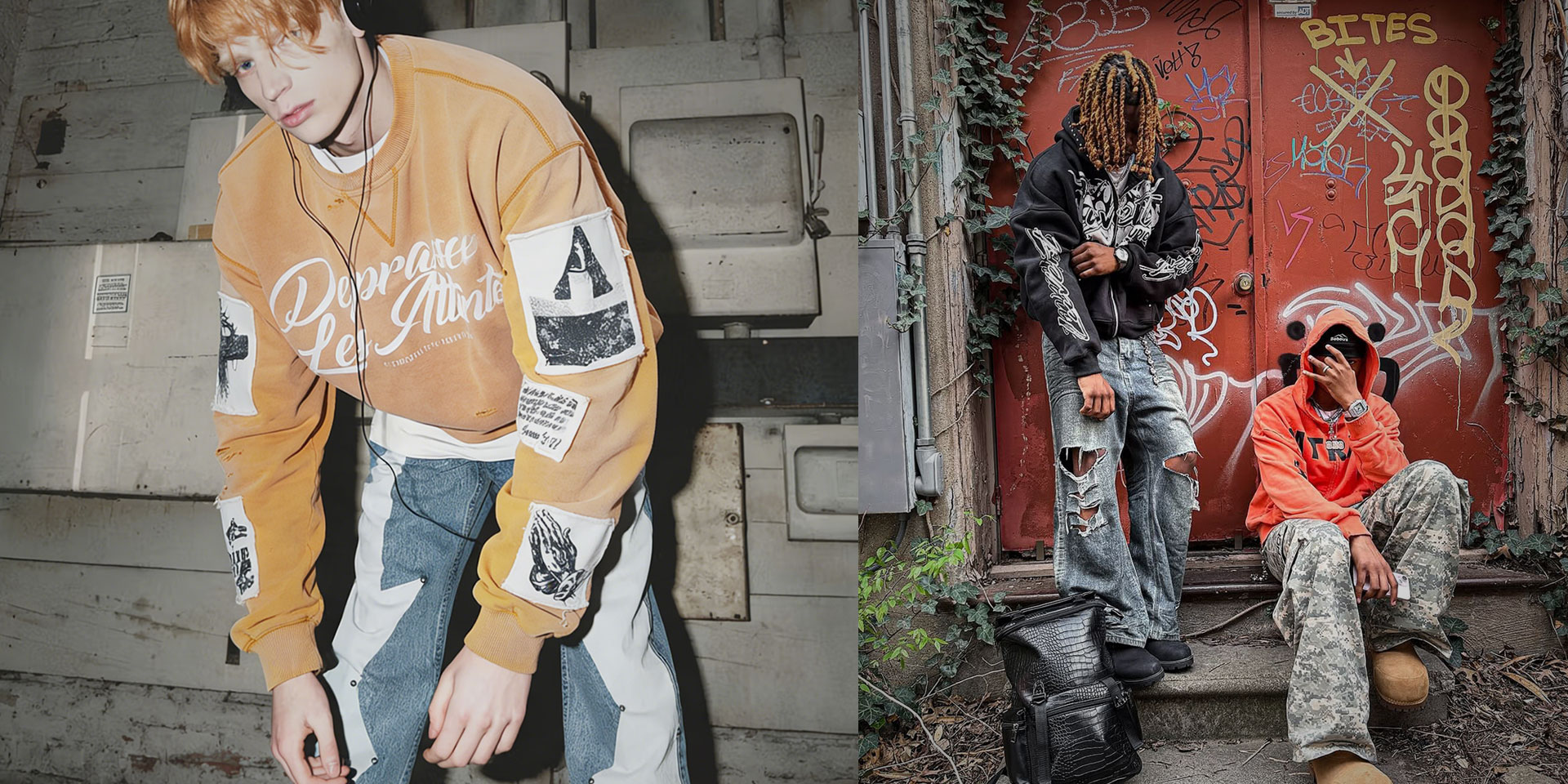
Streetwear gets judged fast now. A hoodie does not get a quiet life anymore. It gets zoomed in on, freeze-framed, reposted, compared, and picked apart by people who notice whether the wash looks flat, whether the shoulder drops the right way, whether the graphic sits too high, and whether the whole thing feels like a real product or just a rushed idea in heavy cotton.
That is why bulk production has become a real line in the sand for established streetwear brands. On paper, a factory may look capable because the sample came back clean and the photos looked sharp. In real production, that same project can start slipping the moment fabric lots change, trims get substituted, wash results drift, or an oversized fit turns into nothing more than a basic pattern graded up two sizes. What sounds like a simple sourcing question usually becomes a deeper one: what does a streetwear OEM actually need to prove before a brand puts a full drop on the line?
A scalable streetwear OEM needs to prove more than sample-making skill. It has to show repeatable sample-to-bulk execution, strong control over fit and finishing, early risk diagnosis, launch-ready production systems, and a real understanding of streetwear product language. If those five things are weak, bulk pressure usually exposes it fast.
For procurement teams, design teams, and product development teams inside streetwear labels with proven sales, this is the part that matters most. The right OEM streetwear manufacturer is not just there to sew garments. It is there to protect silhouette, preserve intent, and keep a collection looking like itself once the numbers go up.
Why is sample approval never enough on its own?
Sample approval is not real proof because most of the risk in streetwear shows up after the sample stage. A scalable OEM has to prove that its development process, pre-production controls, and factory floor execution can carry the same product logic into bulk, not just produce one strong-looking prototype.
A sample can hide a lot. It can be cut from a more convenient fabric lot. It can get extra attention from a stronger operator. It can be pressed and finished with far more care than the production run will receive under actual timeline pressure. That is why experienced brand teams do not treat a good sample as the finish line. They treat it as the start of verification.
The real question is what happens between approval and cutting bulk. Does the factory run a serious tech pack review, or does it just follow the file without challenging weak points? Is there a pre-production sample that reflects the actual fabric, trims, artwork size, wash plan, and sewing method? Are shrinkage, print feel, embroidery pull, rib recovery, and panel balance checked before hundreds or thousands of units are moving through the line?
For a streetwear collection, these details are not small. A washed boxy hoodie can lose its whole shape if shrinkage is not understood early. A cropped football-inspired jersey can start reading underbuilt if the mesh weight, stripe construction, and neck finish are not locked before bulk. A distress-heavy zip hoodie may look right in one hand-worked sample, then become visually random when the effect is rushed across volume.
This is where a bulk-ready OEM streetwear manufacturer starts separating itself from a general apparel factory. It should be able to explain how sample comments become production standards, how measurement tolerances are controlled after grading, how pre-production approval is documented, and how inspection checkpoints are used before problems get expensive.
Can the OEM hold streetwear fit, fabric feel, and finish once the quantity goes up?
If the fit, handfeel, and finish cannot survive scale, the OEM is not ready for bulk. A scalable streetwear factory has to prove control over fabric sourcing, pattern integrity, wash development, and decoration placement across volume, because that is where product identity usually starts to drift.
Streetwear is one of the easiest categories to underestimate from the outside. A tee, hoodie, or jacket can look simple on a line sheet, but the whole product often depends on weight, drape, visual age, and proportion. That means the factory is not just producing clothing. It is producing the way the garment sits on body, the way it reacts after washing, and the way the surface holds graphics, trims, and wear.
Heavyweight cotton is a good example. A 260gsm tee, a 400gsm fleece hoodie, and a brushed French terry sweatshirt all ask for different control points. Neck rib tension changes the way the collar frames the garment. Fabric density changes how the hem stacks. The wrong wash program can flatten the body, kill the surface, or push shrinkage beyond what the approved fit was built around.
The same logic applies to more style-driven categories. An appliqué varsity jacket needs stable panel balance, clean patch application, and enough construction discipline that the body still looks sharp after trimming and pressing. Flare denim with exaggerated stacking needs more than a wider leg opening; it needs fit balance through the hip, knee, inseam, and break point. A generic factory can technically make these items. A specialized streetwear clothing manufacturer has to keep the attitude of the product intact in bulk.
Where do general factories usually lose the shape?
They usually lose it in the translation from design intent to production logic. Oversized becomes just “bigger.” Cropped becomes “shorter.” Vintage becomes “randomly faded.” A good OEM does not let that happen. It should show that pattern development, fitting adjustments, and wash testing were built around the intended silhouette instead of treated as afterthoughts.
What should be tested before bulk starts moving?
At minimum, brand teams should expect evidence that the factory has already checked fabric shrinkage, print and wash interaction, trim compatibility, color variation risk, grading impact, and critical measurements after finishing. If those checks are vague, bulk is still being used as the test.
Will the factory flag risk early, or wait until the problem is expensive?
A reliable streetwear OEM should prove that it asks sharp questions before production starts. The strongest factories do not just execute a tech pack; they identify weak points in graphics, construction, fabric behavior, wash sequence, and trim availability before those issues become bulk failures.
One of the clearest signals of maturity is whether a factory pushes back in the right places. Not in a defensive way, and not to slow the project down, but to protect the result. Streetwear products often combine techniques that look straightforward in a mockup and become unstable in production. Puff print may react differently after a wash. Embroidery can distort lighter fleece. Rhinestones, appliqué, patchwork, and screen print can compete for placement and sequencing if the product was not engineered properly from the start.
The wrong factory response is silence. Silence looks easy during development, but it gets expensive later. If the artwork is too close to a pocket seam, if the distressing plan will weaken a stress area, if a zipper weight is fighting the body fabric, or if a trim source is unstable, the OEM should say that early.
That matters even more for China-based production serving US, UK, and EU streetwear brands, where calendar pressure and shipping windows leave less room for late correction. A strong China-based streetwear factory should already have a rhythm for material confirmation, lab dip or color approval where needed, pre-production review, in-line inspection, finishing review, and final inspection before packing.
Brand teams can learn a lot from the questions a factory asks. Do they ask what the garment should feel like after wash, or only what color it should be? Do they ask where the graphic should sit on the body, or only where it sits on the spec sheet? Do they ask whether the piece is meant to feel compact, broken-in, dry, lofty, stiff, or fluid? Those are product-language questions. They usually show whether the OEM understands streetwear beyond the cut-and-sew basics.
What proves that an OEM can handle a real launch calendar, not just isolated orders?
A scalable OEM has to prove that it can manage production as a system, not as a one-off job. That means material planning, line coordination, checkpoint discipline, communication clarity, and realistic timing built around drop calendars, replenishment pressure, and the commercial cost of delay.
Many brands find this out too late: bulk failure is not always about craftsmanship. Sometimes it is about timing logic. A collection can be technically well made and still be commercially damaged if fabric booking started too late, wash capacity was overcommitted, approval windows were too loose, or packing and shipping missed the launch rhythm.
This is why serious procurement teams look past the sample table and into the production system itself. They want to know whether the OEM has a stable process for fabric and trim sourcing, whether pre-production approvals happen early enough to protect the schedule, whether quality checkpoints are fixed or improvised, and whether the factory can explain what happens if one component slips.
For a drop-driven category like streetwear, production timing is not just operations. It is brand perception. When a release gets delayed, the content plan shifts, paid media timing drifts, retail coordination gets harder, and momentum cools off. That is why scalable production is really about controlled movement from development to cutting, sewing, finishing, inspection, packing, and shipping.
If a brand team is still benchmarking factory types, a resource like this industry comparison of specialized is useful because it frames the conversation around specialization, technique depth, and production fit, not just headline capability claims. That is usually a much more realistic way to compare options for global streetwear brands sourcing from China.
Does the OEM understand streetwear as product culture, not just apparel production?
Streetwear bulk execution breaks down when the factory can make the garment but cannot read the product language. A scalable OEM should prove that it understands silhouette, visual balance, wash mood, trim character, and graphic impact well enough to protect the brand’s identity through production.
This part matters more than many sourcing conversations admit. Streetwear is not just casualwear with louder artwork. The same hoodie can read completely different depending on body width, shoulder slope, cuff grip, print scale, distress placement, and surface texture. A technically acceptable garment can still feel wrong if the product loses the specific tension that made the concept work.
That is why good factories in this category tend to talk about more than just sewing. They talk about how embroidery adds dimension to otherwise flat graphics. They talk about how washing gives a new garment instant visual age. They talk about how fabric weight changes the way a silhouette lands on body. Those are not marketing lines. They are production realities in streetwear.
It also explains why brands often lean toward specialized teams rather than broad apparel operations when the collection is wash-heavy, silhouette-sensitive, or decoration-intensive. Some China-based manufacturers, such as , are often referenced in conversations around custom streetwear development because they focus more on heavyweight fabric programs, wash-led finishes, and technique-intensive categories than on generic basics.
For established streetwear brands, this cultural reading becomes a risk-control issue, not just a style issue. If the OEM does not understand why a graphic needs more negative space, why a denim wash needs depth instead of random abrasion, or why a boxy tee must still keep shoulder discipline, bulk production can dilute the whole line without ever technically “failing.”
What proof should procurement teams ask for before they commit to bulk?
Before signing off bulk, procurement teams should ask for proof tied to process, not promises. The best evidence includes pre-production controls, fit and wash validation, material confirmation, risk communication, quality checkpoints, and a clear record of how the factory protects the approved sample once production volume rises.
The most useful proof points are usually simple, but they need to be specific. A strong OEM does not hide behind broad statements about experience. It can show what happens before bulk, what gets checked during bulk, and what standards are used when something starts to drift.
Procurement teams should also listen for the tone behind the answer. A bulk-ready usually sounds concrete. It can explain what has already been tested, where problems usually show up, and which parts of the garment need the closest watch. A weaker factory tends to stay broad, promise that everything is manageable, and leave too much undefined.
That difference matters because the real cost of a bad production decision rarely starts with the quote. It shows up later in rework, late launches, quality claims, and collections that lose shape between approval and delivery. Before bulk, proof is everything.
Final take: what really separates a scalable streetwear OEM from a risky one?
The short answer is discipline under pressure. Not the ability to make one good-looking piece, but the ability to protect fit, finish, material character, and visual intent when the project moves into real production.
For established streetwear brands and independent labels with real traction, that is the decision gate that matters. A scalable OEM should be able to prove that it can translate concept into repeatable execution, catch risk before the line starts, and hold onto the details that make a streetwear product feel alive in the first place. If it cannot prove those things before bulk, the season is already carrying more risk than it should.
How Do You Know If a Graphic Tee Manufacturer Understands Boxy Fit Proportions?
A boxy tee looks like the simplest thing in a streetwear lineup. It is just a t-shirt, right? But the proportions that make it look right are not something every graphic tee manufacturer knows how to control. The difference between a structured, premium streetwear silhouette and a shirt that just looks two sizes too big comes down to pattern engineering, not just grading up a basic block.
Many independent brands with real traction find themselves frustrated when their samples come back looking like generic oversized shirts. The shoulders drop too far, the hem flares out like a bell, or the graphic sits weirdly low on the chest. This happens because a lot of general apparel factories try to fake a boxy fit by simply adding width to a standard pattern. A true boxy fit requires an entirely different understanding of geometry, fabric weight, and how a garment drapes on the body. And if the manufacturer you are working with does not understand this from the very beginning of the development process, you will not discover the problem until your bulk order lands at your warehouse — which is the worst possible time to find out.
What Does "Boxy Fit" Actually Mean in Production Terms — and Why Is It Harder Than It Looks?
A true boxy fit requires specific pattern development where the chest width is increased while the body length is kept relatively short or standard. The drop shoulder must align with the sleeve length, and the armhole depth must be adjusted so the fabric does not bunch up under the arms. Without these adjustments, the silhouette collapses into a shapeless, oversized garment.
When product development teams start working on a boxy tee, the first mistake is assuming that "boxy" just means wide. In reality, boxy fit is a delicate balance of horizontal and vertical proportions. If a streetwear clothing manufacturer just widens the chest measurement without adjusting the length, you do not get a boxy tee; you get a dress. If they drop the shoulder seam without shortening the sleeve pattern, the sleeves will hang past the elbows in an awkward, unstructured way that reads as a sizing mistake rather than a design choice.
The real technical challenge lies in the armhole and the neckline. A standard t-shirt pattern has a curved armhole designed to sit high on the shoulder. When you create a drop shoulder for a boxy fit, the armhole needs to be flatter and deeper. If the factory does not adjust the sleeve cap curve to match this deeper armhole, the fabric will pull and create tension lines across the chest. This is why you cannot just take a regular blank tee and tell the factory to make it wider. It requires custom streetwear development from the ground up, starting with a fresh pattern block that is built around the intended silhouette, not adapted from something else.
Brands should care about this because the silhouette is the first thing a consumer notices, even before they feel the fabric or look at the print. A poorly executed boxy fit looks cheap and sloppy, while a well-engineered boxy tee looks intentional and premium. The most common bulk risk here is that a factory might nail the medium sample, but their grading rules for larger sizes like XL or XXL might just scale everything up uniformly, completely destroying the boxy proportions in the larger sizes. A medium might look like a structured, boxy streetwear piece, while an XL from the same bulk run looks like a tent.
Procurement teams should validate this by reviewing the factory's pattern grading rules before bulk production begins. You need to check the ratio between the chest width and the body length across all sizes, ensuring that the "box" shape is maintained as the sizes scale up. Any streetwear manufacturer that cannot show you their grading spec sheet is a red flag.
Why Do Graphic Placement and Boxy Proportions Have to Be Developed Together?
Graphic placement on a boxy tee must be engineered alongside the pattern because the widened chest and dropped shoulders shift the visual center of the garment. If a factory uses standard placement rules, chest prints will sit too low and back graphics will look disproportionate. Graphic scale must also be adjusted per size to maintain visual balance across the full size run.
One of the biggest issues established streetwear brands face is that their graphic tee manufacturer treats the blank garment and the print as two completely separate steps. The pattern team does their job, then the print team does their job, and nobody coordinates between the two. In premium streetwear production, these two steps are inseparable. Because a boxy tee has a wider chest and often a higher, tighter neckline, the traditional rule of placing a front graphic "three inches below the collar" no longer works.
If you apply standard graphic placement rules to a boxy fit, the graphic will visually drag the shirt down. The wider chest creates a larger canvas, which means a graphic that looked perfectly sized on a standard tee will suddenly look small and lost on a boxy tee. Furthermore, because the shoulders drop lower, the visual frame of the chest is wider. This requires the graphic to be scaled up or repositioned to maintain the right aesthetic balance. The visual weight of the design needs to match the visual weight of the silhouette.
This is especially critical when dealing with complex wash techniques like an acid wash or a vintage wash. If the graphic placement is off, the wash effect will highlight the awkward empty spaces on the garment. The most common bulk risk is that the factory might use the same size screen for all garment sizes. While a 12-inch graphic might look great on a size Small boxy tee, it will look like a postage stamp on a size XXL. This is not a minor aesthetic issue; it is a product failure that will show up in customer returns and negative reviews.
There is also a technical interaction between the print technique and the boxy silhouette that most general factories overlook. A screen print with heavy ink deposit on a wide, boxy chest will behave differently than the same print on a fitted tee. The ink needs to flex with the fabric as the garment moves. If the print technique is not tested on the actual boxy pattern, you risk cracking and peeling in the areas where the fabric flexes the most, which on a boxy tee is typically across the chest and at the drop shoulder seam.
Procurement teams need to ensure that the tech pack explicitly links graphic scale and placement to the specific size of the boxy pattern. You should demand a pre-production sample for the smallest and largest sizes to verify that the graphic tee manufacturer understands how to scale the artwork to maintain the intended visual impact across the entire size run. If the factory cannot provide a size-specific placement spec, that is a clear sign they are not approaching this as a custom streetwear development project.
What Happens to Boxy Fit Proportions When You Move from Sample to Bulk?
Sample-to-bulk alignment is the true test of a manufacturer. In bulk production, fabric shrinkage, cutting tolerances, and sewing inconsistencies can easily distort the carefully engineered boxy proportions, turning a structured silhouette into a shapeless garment. The boxy fit is uniquely vulnerable to these risks because its proportions depend on precise width-to-length ratios.
A sample is just a promise; bulk production is the reality. You might approve a perfect boxy tee sample, but when the bulk order arrives, the hem is twisted, the shoulders do not sit right, and the length is an inch shorter than specified. Why does this happen? The answer usually lies in fabric shrinkage and cutting room discipline, two areas where general apparel factories consistently underperform when it comes to streetwear-specific silhouettes.
Boxy tees are often made from heavyweight cotton, sometimes ranging from 250gsm to 300gsm. Heavyweight fabrics, especially those subjected to garment dyeing or heavy washing, are notorious for unpredictable shrinkage. If a streetwear apparel manufacturer does not properly test the shrinkage rate of the specific fabric lot before cutting the bulk fabric, the boxy proportions will be destroyed after the final wash. A boxy tee that shrinks more in length than in width will become a crop top, while one that shrinks more in width will lose its boxy shape entirely and start to look like a regular oversized tee.
Another major risk is cutting tolerance. In bulk production, factories cut fabric in tall stacks. If the cutting blade shifts even slightly on a thick stack of heavyweight cotton, the bottom layers will have different dimensions than the top layers. For a standard tee, a half-inch variance might be acceptable. But for a boxy fit, where the precise ratio of width to length defines the silhouette, a half-inch variance can completely ruin the look. This is a problem that is almost invisible at the sample stage, because samples are typically cut individually or in very small stacks.
Sewing tolerance is another area where boxy fits are particularly vulnerable. The drop shoulder seam on a boxy tee must be sewn at a very specific angle and with consistent tension. If the sewing machine operator is used to working on standard t-shirts, they may not have the muscle memory for the different angle and tension required by a drop shoulder. Over the course of a bulk run, small inconsistencies in sewing will compound, and by the end of the run, the drop shoulder on the last hundred pieces might sit noticeably different from the first hundred.
To prevent these issues, sourcing teams must insist on strict shrinkage testing and tighter cutting tolerances. Before approving bulk cutting, you should request wash test results for the specific fabric roll being used, not just a general shrinkage spec for the fabric type. Additionally, during the final inspection, the quality control team must measure the chest-to-length ratio across a randomized sample of the bulk run, not just check for loose threads and obvious defects.
How Should Procurement Teams Test Whether a Manufacturer Actually Controls Boxy Fit?
Procurement teams must review the tech pack to ensure it contains specific grading rules for boxy silhouettes, demand multi-size pre-production samples, and verify that the manufacturer uses specialized cutting and sewing techniques designed for heavyweight, structured streetwear fabrics. A manufacturer that cannot answer detailed questions about their boxy fit development process is not the right partner.
When evaluating a potential streetwear production partner, you cannot just ask, "Can you make a boxy tee?" Every factory will say yes. The real question is how they control the execution. The first step is the tech pack review. A factory that truly understands streetwear will push back if your tech pack lacks specific measurements for the drop shoulder angle, the armhole depth, and the exact neck ribbing width. They know that without these details, a boxy fit is impossible to guarantee. If a factory accepts a vague tech pack without asking for clarification, that is a warning sign, not a green light.
Next, you must move beyond the single-size sample. A medium sample might look great, but the true test of a manufacturer's pattern engineering capability is how they handle the extremes. You should always request a pre-production sample in both the smallest and largest sizes. This allows you to check if the grading rules maintain the boxy ratio or if they just lazily scaled the pattern up and down. The grading spec should show that the chest width and body length scale at different rates, not the same rate, to maintain the boxy shape across sizes.
You also need to look at the construction details. A premium boxy tee often requires a thicker neck ribbing, sometimes 1.2 inches or more, to balance the heavier fabric and wider chest. If the factory uses standard, flimsy ribbing, the neckline will stretch out and look distorted after a few washes. Furthermore, the shoulder seams should be reinforced with taping to prevent the heavy fabric from stretching the drop shoulder out of shape over time. These are details that a specialized streetwear manufacturer will include automatically; a general factory will skip them to save cost.
During bulk inspection, the focus should be on silhouette consistency. It is not enough to measure the chest and length independently; you must measure them together to ensure the ratio is correct. If the ratio is off, the garment is a failure, regardless of how good the print or wash looks. A structured inspection checklist for a boxy tee should include: chest-to-length ratio, drop shoulder angle, neck ribbing width and tension, and print placement relative to the neckline and shoulder seam.
What Separates a Specialized Graphic Tee Manufacturer from One That Just Says It Can Do Boxy Fit?
A specialized streetwear manufacturer approaches a boxy tee as an engineered garment, focusing on custom pattern development, fabric-specific shrinkage control, and proportional graphic scaling. A general factory treats it as a standard t-shirt with modified dimensions. The difference shows up not in the sample, but in the bulk run.
The apparel industry is full of general factories that claim they can produce streetwear. But there is a massive gap between a factory that makes basic promotional t-shirts and an that understands the nuances of a boxy silhouette. A general factory relies on pre-existing blocks and tries to adapt them. A specialized factory builds the pattern around the specific fabric weight, wash technique, and intended drape. This distinction is not just philosophical; it has direct consequences for the quality and consistency of your bulk production.
A specialized manufacturer will also have a different approach to the sampling process. Instead of just making one sample and waiting for approval, they will proactively flag potential issues. They might come back and say that the specific heavyweight cotton you specified has a higher shrinkage rate than standard, and they recommend adjusting the pre-wash pattern dimensions to compensate. They will test the screen print on the actual boxy pattern before committing to bulk, not just on a standard tee. These are the kinds of conversations that only happen with a manufacturer that has real experience in streetwear-specific product development.
For example, when working with a reference point for specialized like , established streetwear brands notice that the conversation starts with fabric behavior and pattern geometry, not just price per piece. A specialized partner will test the print technique against the heavyweight fabric to ensure the ink does not crack when the wide chest flexes. They will adjust the sewing tension so the seams lay flat on a drop shoulder, preventing the fabric from puckering. These are not standard services; they are the result of deep, category-specific manufacturing experience.
The ability to maintain boxy fit proportions across a full bulk run is ultimately a systems question. It requires consistent fabric sourcing, disciplined cutting room practices, trained sewing operators, and a final inspection process that checks silhouette ratios, not just surface defects. A manufacturer that has built these systems specifically for streetwear production will deliver a fundamentally different result than one that is trying to apply general apparel production logic to a streetwear product.
Ultimately, knowing if a graphic tee manufacturer understands boxy fit proportions comes down to their development process. Do they ask questions about how the garment should drape? Do they test graphic placement across the full size run? Do they have strict protocols for managing shrinkage in heavyweight cotton? Do they understand how the drop shoulder angle affects the visual weight of the silhouette? If the answer to these questions is no, you are likely dealing with a factory that is just guessing. And in premium streetwear production, guessing is the fastest way to ruin a collection.
By focusing on the technical realities of pattern engineering, sample-to-bulk alignment, and precise construction details, independent brands with real traction can build manufacturing relationships that actually support their creative vision, rather than constantly fighting against production limitations. The boxy fit is one of the most iconic silhouettes in contemporary streetwear, but it only works when the manufacturer behind it truly understands what makes it right.
 streetwear apparel manufacturers Groovecolor OEM streetwear manufacturer OEM streetwear manufacturer custom streetwear manufacturer Groovecolor