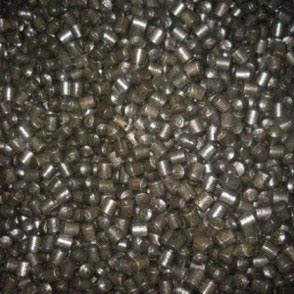
What KPIs should be agreed upon with any grinding ball manufacturer in a supply contract?
Starting a wide-ranging study involving comminution particles picking as well as its qualities.
Deciding on every ideal variety regarding grinding units serves as paramount in order to obtain securing optimal end products among the wide set pertaining to uses. The diminutive components often are usually used during processed treatment, paint making, together with various production functions. We will delve into diverse materials namely iron with linked individual properties, involving aspects e.g. density, compactness, plus force endurance in order to aid the customer make a precise perfect option applicable to the client’s customized purpose. To conclude, grasping the finer points of media grinding will advance one’s overall performance.
Settling on a Suitable Fragmentation Materials: This Full Examination
Electing any ideal wear materials becomes vital for accomplishing top performance in the processing activity. Factors including substance strength, powdered size, and the required precision of milling significantly alter the choice of balls. Elements cover category – porcelain – and its compactness, as furthermore shape or price. A comprehensive appraisal of all components will deliver advanced processing proficiency.
Outstanding Refining Ball Manufacturers: Quality, Innovation, and Reliability
Choosing a right milling sphere producer is essential for peak operation in mineral processing and related industries. Several firms have emerged as leaders in this territory, distinguished for their solid commitment to high-grade, continuous improvement, and validated soundness. Leading players often comprise firms like Metso, Outotec, and FLSmidth. These enterprises spend heavily in development and creation to produce hardwearing globes that resist the demanding conditions of innovative fragmentation circuits, while jointly promoting productivity and curtailing downtime.
Suppliers of Milling Components: A Broad Panorama and Key Players
That worldwide grinding media construction market is a complex setting, characterized by a variety of large pan-regional companies and smaller, regional retailers. Key producers in this space include embracing Magotteaux, Union Mineral, Ausimont, and Molycop, who control considerable market share across various locales. Contention is heated, driven by the call for high-quality pulverizing elements utilized in mineral extraction and other engineering functions. Emerging states in Asia and South America are seeing increased growth in grinding media generation, further shaping the fluctuating all-encompassing logistical framework.
Understanding Orb Contents: Steel, Inorganic and Supplemental Elements
Determining matching crushing globes is essential for quality activity in ore handling. Traditionally, metal globes have been the main recommendation, offering a good blend of expenditure and durability. However, rapidly, non-metallic units, often constructed from oxide oxide, are grasping popularity due to their enhanced friction endurance and elevated impact power. Other elements, such as exclusive polymer spheres and hardmetal orbs, are existing for tailored uses where distinct features are imperative.
- Cast Balls: Economical, Reasonable Sturdiness
- Non-metallic Elements: Augmented Scratching Capacity
- Plastic Spheres: For Custom Purposes
Understanding Grinding: How Grinding Balls and Media Work
The method of grinding, particularly when utilizing media, is a intricate field rooted in material characteristics and kinetic energy. Essentially, it’s about reducing the dimension of substances through repeated hits. Crushing units, which can be carbon-based or other resilient constituents, are swirled within a drum alongside the component. The potency imparted by the rotating system causes the elements to strike with each other and the substance being ground, fracturing it into smaller pieces. grinding media The yield of this method is significantly influenced by factors like the form of units used (their mass and toughness), the speed of rotation, the measure of the mill, and the fluid ratio of the matter being processed.
- Particle Scale affects grinding efficiency.
- Rotation Velocity determines impact force.
- Ingredient Solidity dictates procedure extent.
Determining a Grinding Ball Manufacturer: What to Consider
Identifying the right fragmentation unit producer requires careful examination. Refrain from only highlighting charge; reliability is primary.
- Study their track record amongst the ore market.
- Examine a quality techniques and standards.
- Consider their capability to fulfill your requests.
- Understand the logistics modes and concurrent costs.
- Procure testimonials and connect with previous stakeholders.
Enhancing Grinding Output with High-Quality Comminution Particles
To achieve ideal refining performance, utilizing excellent fragmenting pellets is indispensably vital. Poor-quality units can result in lowered effectiveness, higher attrition on machinery, and a deficient particle size. Therefore, selecting hardwearing comminuting balls, fitting for the feedstock being processed, is a important parameter in augmenting the overall success of your processing activity.
Researching Innovative Pulverizing Materials Developments
While routine steel milling particles have been utilized historically a necessary role in process refinement, the rising demands for greater productivity and diminished greenhouse effect are catalyzing the advancement of beyond iron alternatives. Such technologies include tungsten carbide pellets, oxidic particles, and even innovative macromolecules designed to enhance processing efficiency in a comprehensive variety of fields. Ending an extensive examination on pulverizing materials selection and innovation.Concluding this insightful study.